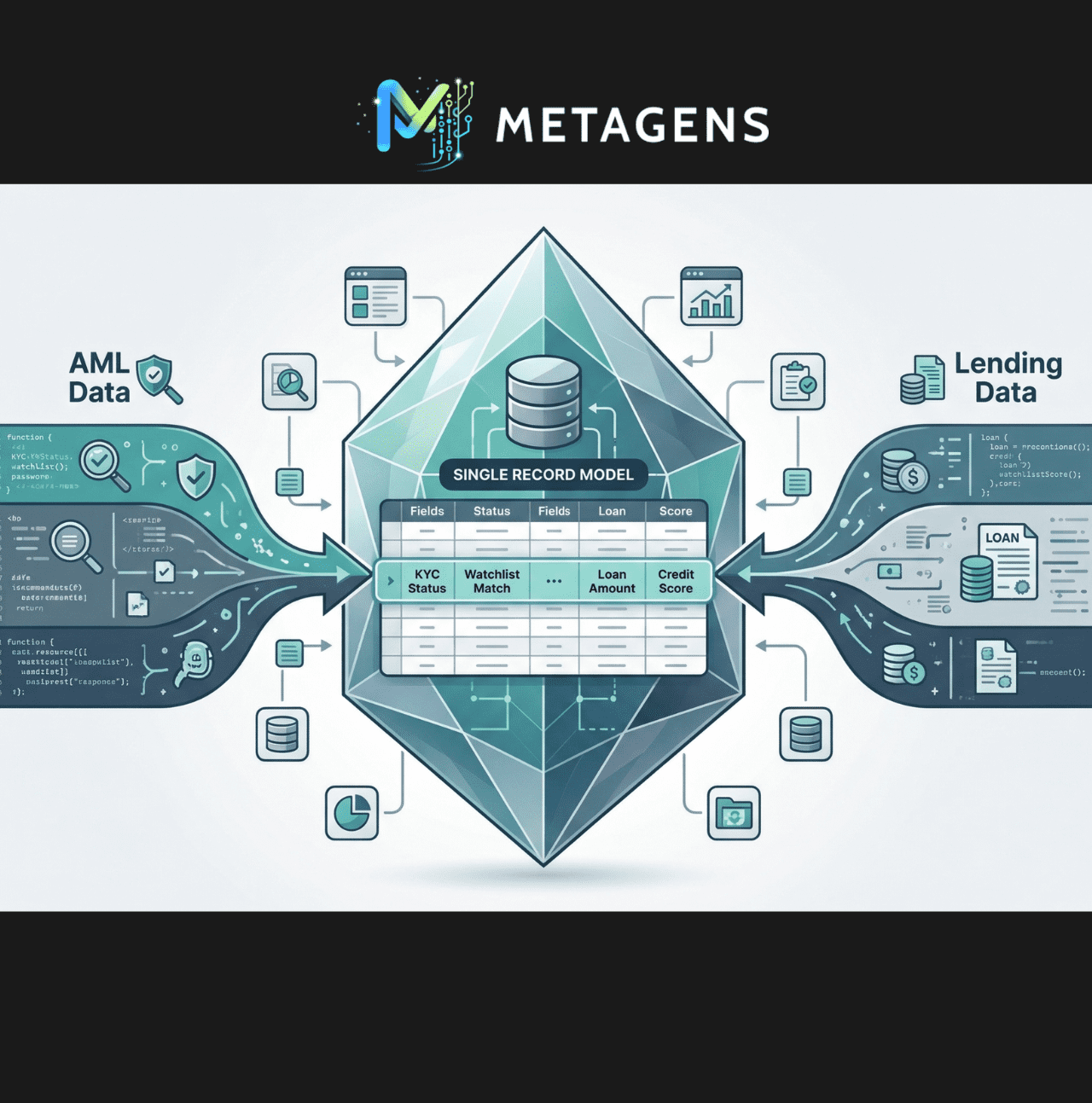
AML and lending records are the same record
Compliance that Runs in the Exact Same Transaction as Your Lending Decision.
Real-time monitoring. SAR generation to FinCEN standards. Global sanctions screening. Not a module you configure after deployment—it is the architecture of the platform itself.
BNP Paribas. $8.9 billion fine. HSBC. $1.92 billion fine. TD Bank. $3 billion fine in 2024. The penalties for AML non-compliance in the US are not theoretical — they are the largest fines in financial services history. And they happened to organisations with compliance teams, compliance budgets, and compliance vendors.
a separate compliance engine runs on its own clock. By the time it checks, the transaction already moved.
flagged after the fact is not compliance. It is documentation of a failure.
a screening that runs against stale data is not a screen. It is a false sense of security.
when the audit trail lives across multiple platforms, reconciling it is a fire drill every time.
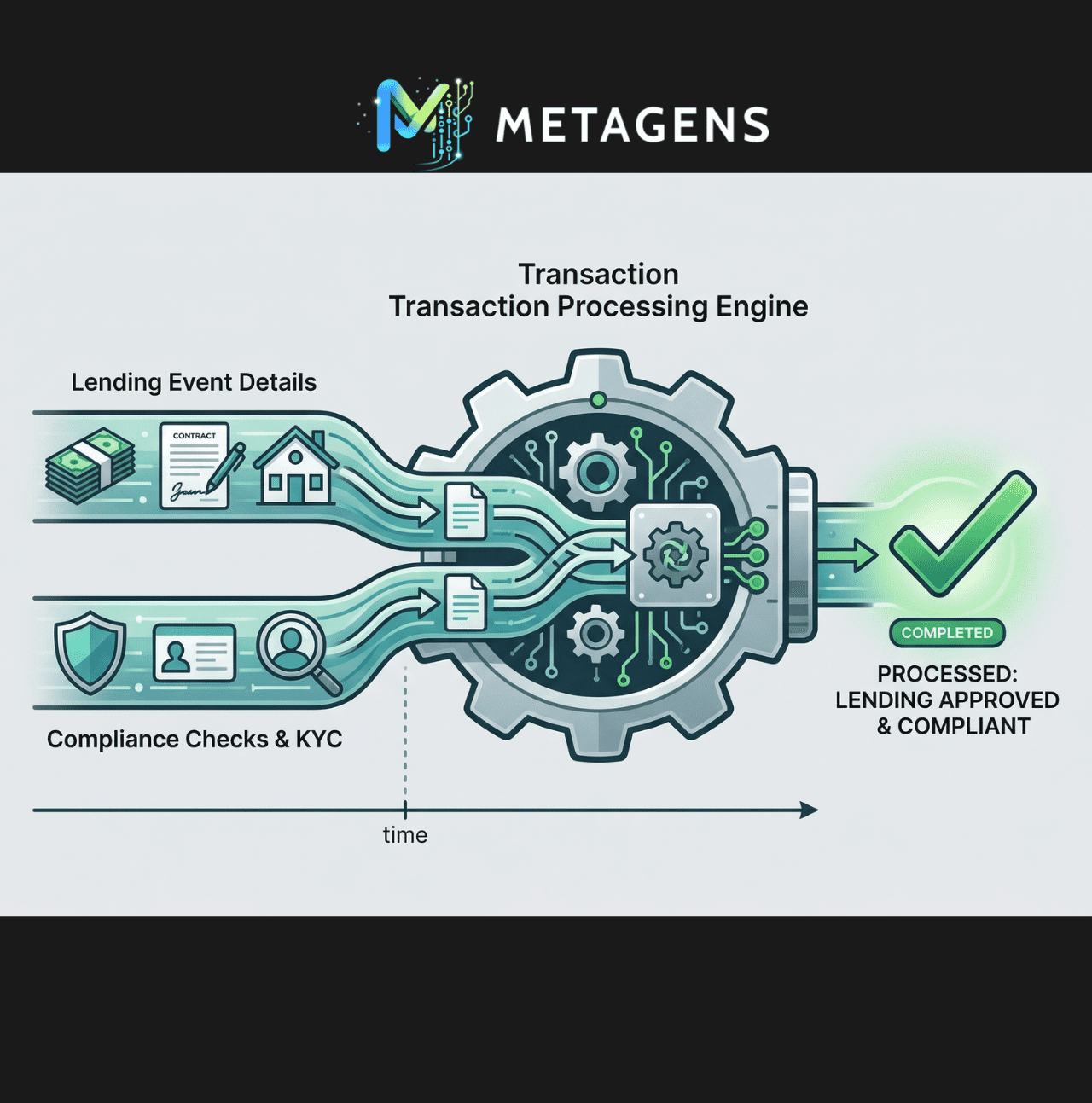
in Metagens.ai, the AML engine and the lending module are the same system. No API call. No delay. No reconciliation.
Compliance is not a feature you configure after deployment—it is the foundation of the platform. Metagens.ai integrates real-time AML monitoring and automated FinCEN reporting directly into the core ledger, eliminating the sync delays and data gaps of third-party APIs.

Every financial transaction monitored in real time — not in batch, not on a delay. Pattern detection runs continuously. Risk scores are updated as new data arrives. Alerts trigger automatically when thresholds are met. No overnight processing cycle.

Suspicious Activity Reports generated automatically when monitoring thresholds are met — to FinCEN standards, with the required data fields populated from the platform's own records. Compliance teams review and file. The system does the preparation.

Customer and transaction screening against OFAC's SDN list, consolidated sanctions programmes, and global watchlists. Screening runs at onboarding and continuously through the customer relationship. Not a periodic batch check — a live, ongoing process.

Politically Exposed Person identification at the customer onboarding stage. Flagging for enhanced due diligence. Integration with international PEP databases. Applied to every new borrower, counterparty, and beneficial owner.

Automatic alerts for suspicious activity routed to investigator dashboards. Investigation workflows for compliance teams. Evidence collection and documentation within the platform. Case tracking from alert to resolution — full history, fully auditable.

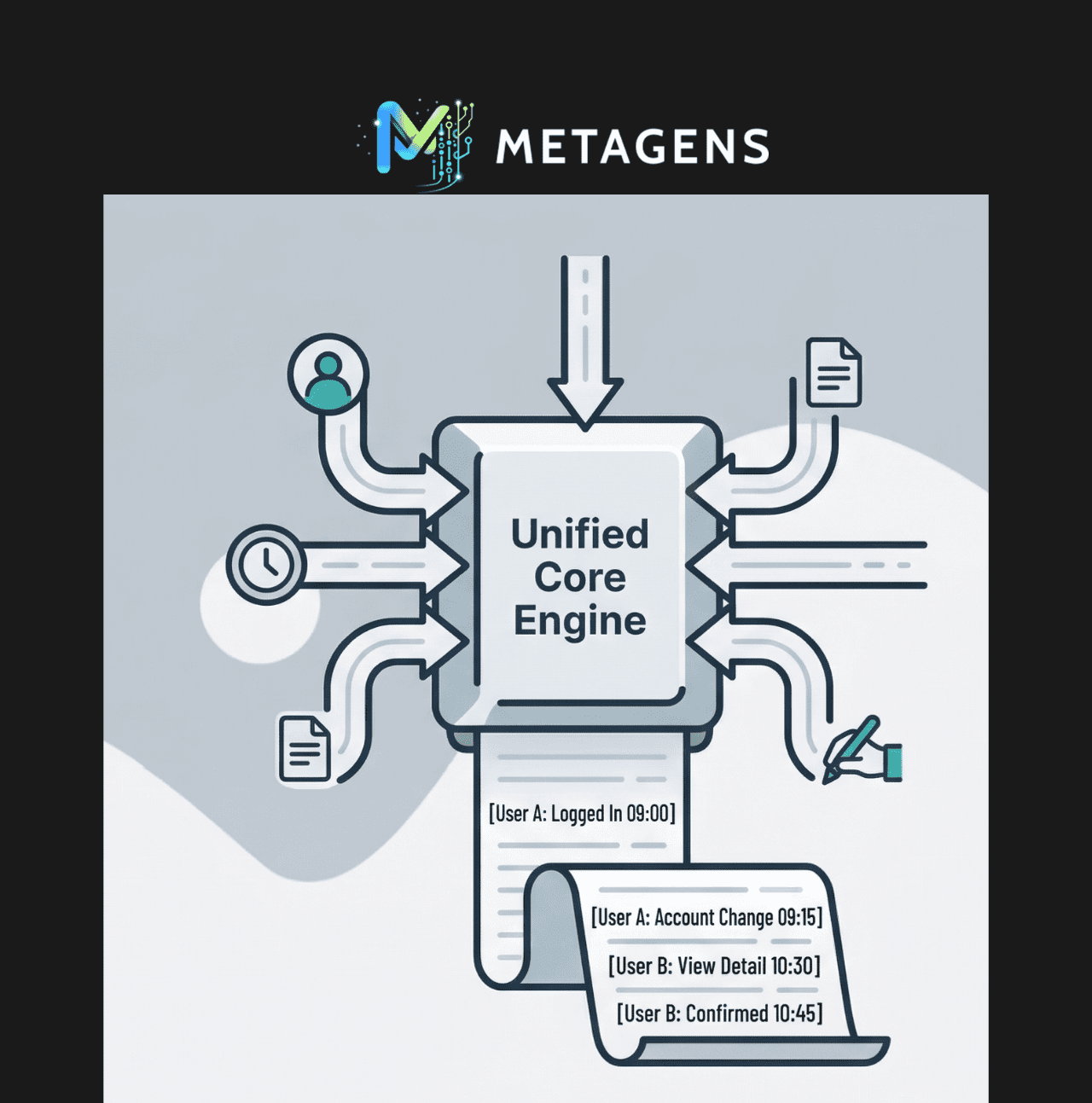
Full audit trails for every financial event across every module. Regulatory compliance reports generated from platform data — not assembled manually from exports. SARs, CTRs, and supporting documentation available for regulator review without preparation.
Most fintech platforms treat compliance as a module. You configure it, connect it to your KYC provider, and set your threshold rules. It works — until a transaction falls between two systems, a vendor updates their API, or a regulator asks for data that was never structured to be retrieved together.
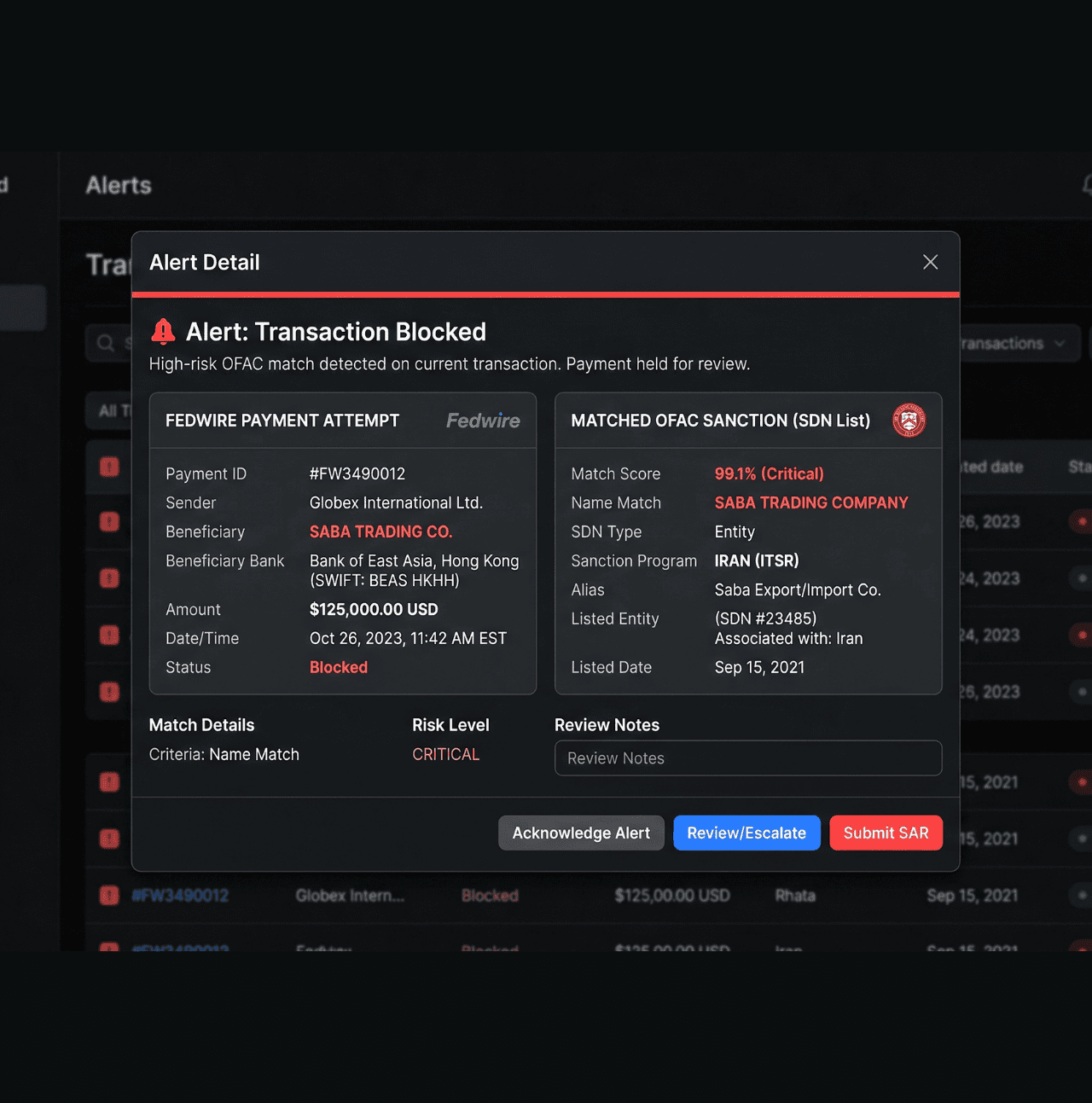
Metagens.ai treats compliance as architecture. The AML engine shares the same data model as the lending module. A loan application and the AML risk score for that application are the same database record — not two records linked by an API call. An OFAC hit on a disbursement stops the payment in the same transaction — not in a parallel process that might run thirty seconds later.

AML and lending records are the same record
compliance runs when the lending event runs, not after
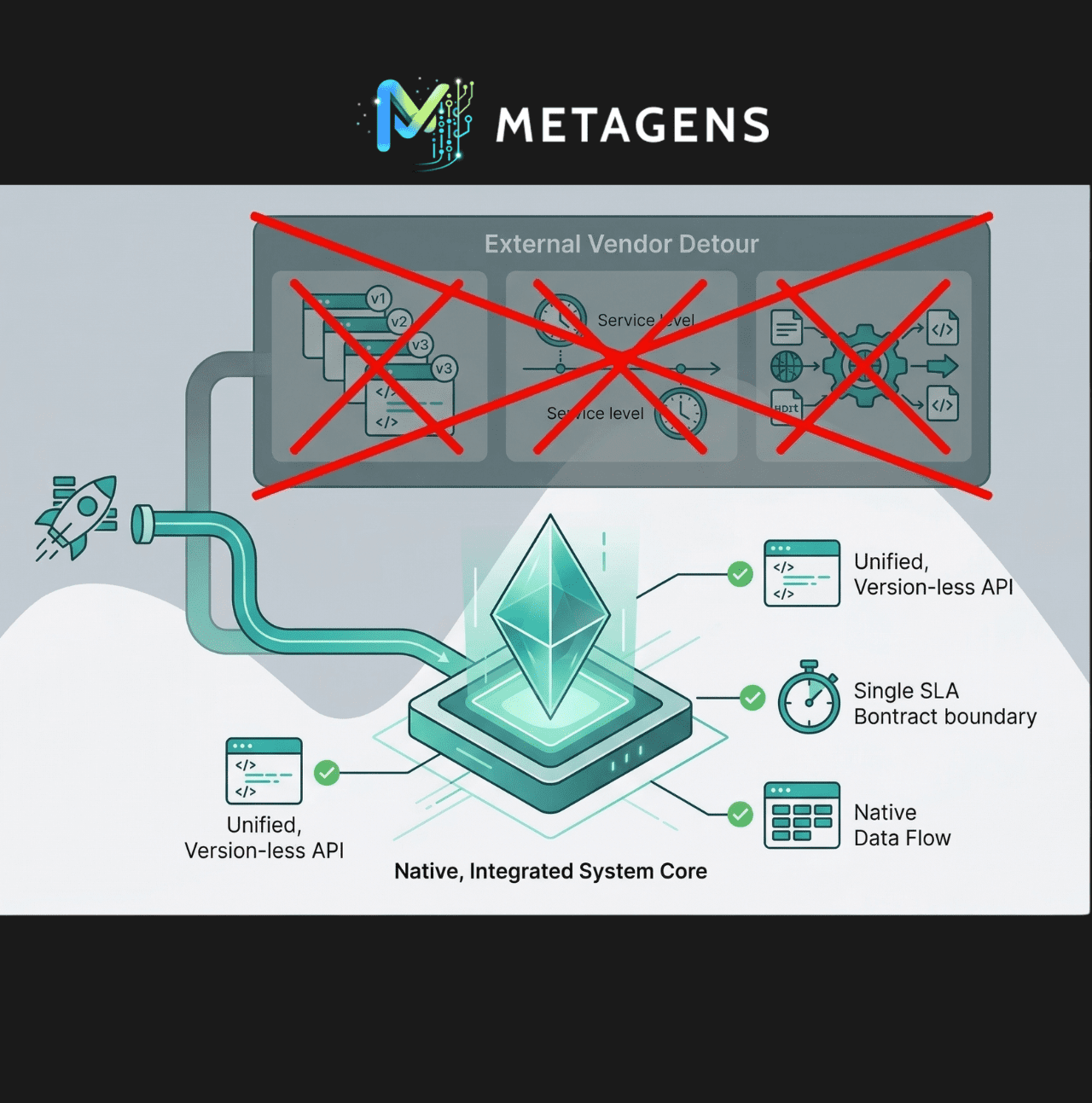
no API versioning, no SLA gap, no data translation layer
Full lending stack — live
Bypass months of fragile integration work. Deploy a fully operational, compliant lending architecture in a fraction of the standard enterprise timeline.
SAR generation — native
It is a bureau of the US Treasury.
Detect and prevent money laundering, terrorist financing, and other financial crimes.
Native ACH disbursements built to NACHA spec.
Execute secure, high-volume disbursements directly from the core ledger. Eliminate the need for third-party payment gateways and external API latency.
Separate servicing vendors needed
Operate your entire financial product from a single, unified codebase. Eradicate vendor bloat, overlapping contracts, and integration failure points.
Most service providers claim to be ‘AML and KYC compliant’ meaning their platform meets the bare minimum standard via third-party integrations.”
Metagens.ai goes further: the AML engine is built into the platform’s core architecture. SAR generation, sanctions screening, PEP detection, and real-time risk scoring are not add-on features you configure after deployment. They run natively from the first loan application.
The platform is built with BSA obligations as design constraints. SAR generation meets FinCEN format and content requirements. OFAC screening runs against the SDN and consolidated sanctions programmes. Customer due diligence (CDD) records are structured to support BSA programme documentation. For specific BSA programme questions — including written AML programme requirements, independent testing, and employee training — we recommend a direct conversation with our team and your compliance counsel.
Every financial transaction processed by the platform generates a monitoring event. The AML engine evaluates that event against your configured rule set — thresholds, patterns, risk scoring criteria — in the same processing cycle. There is no batch window and no overnight processing. If a transaction triggers an alert, an investigator case is opened in the same workflow and routed to the compliance team dashboard.
Yes. Monitoring thresholds, risk scoring criteria, alert routing rules, and investigation workflow steps are configurable by your compliance team within the platform. Standard FinCEN and OFAC requirements are pre-built. Additional rules — specific to your loan product, borrower profile, or jurisdiction — are configured through the platform's rules interface.
An OFAC match triggers an immediate hold on the relevant transaction — disbursement, account opening, or payment processing — within the same processing cycle. An investigator case is opened automatically. The compliance team reviews the match, documents the investigation, and either clears or files a SAR. The platform holds the transaction until the case is resolved. No manual override is possible without an audit record.
One call. We review what your current compliance setup covers — and where a native AML engine would close the gaps.


Full-stack fintech infrastructure for teams building lending products in the US market. Lending. AML. Payments. Core Banking. Cards. One deployment. Built native. Not assembled.
Subscribe for new articles on fintech lending infrastructure, AML compliance, and payments architecture. No marketing content. No product announcements. Just the technical insights.